

Sculptures have been around for thousands of years, and throughout history, there have been some truly remarkable works that have become iconic symbols of culture and beauty. From the Statue of Liberty to Donatello’s David, these famous sculptures have captivated generations of viewers and will continue to do so for centuries to come. In this article, we’ll explore 10 of the world’s most famous sculptures — each with its own unique story — and discover why they are so important in today’s society.
The Importance of Learning About Famous Sculptures

Learning about famous sculptures is important because it gives us a glimpse into the art and culture of different civilizations. Whether we’re looking at ancient Greek statues or modern pieces, exploring these works can help us understand how people from different backgrounds and eras have expressed themselves through art. By studying the techniques used by sculptors, we can learn about how the craft has evolved over time, as well as the unique contributions made by individual artists. We may also be inspired to create our own works of sculpture, which can add beauty to our lives and communities. Finally, understanding famous sculptures can give us insight into what was considered beautiful or meaningful in other cultures and times – allowing us to appreciate them in a new light.
1. The Statue of Liberty
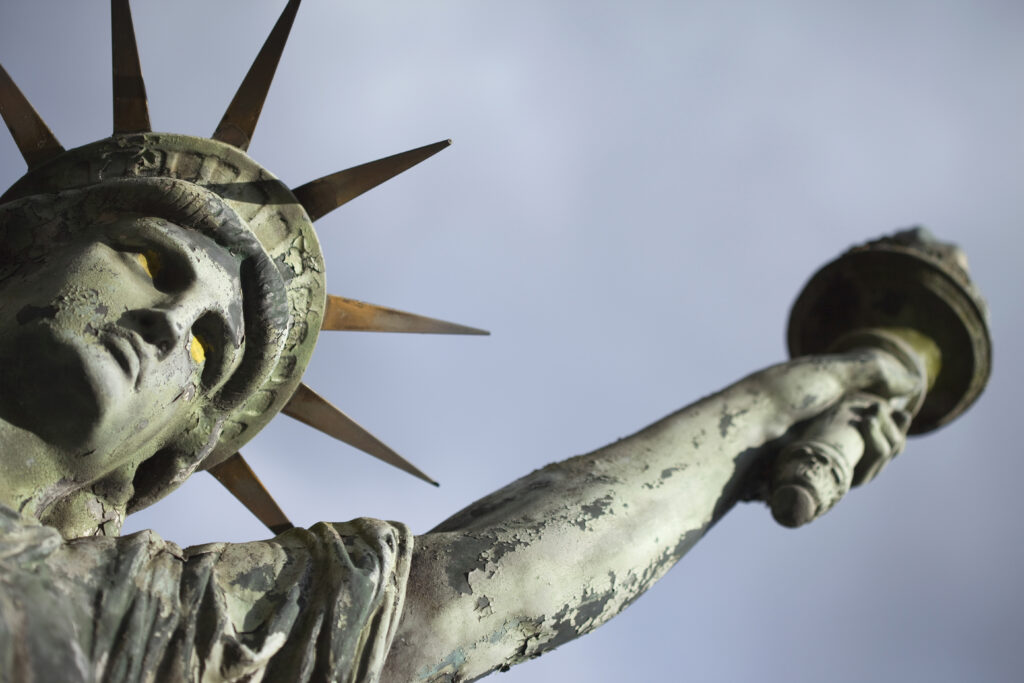
The Statue of Liberty is an iconic symbol of freedom and democracy, located on Liberty Island in the New York Harbor. Created by French sculptor Auguste Rodin, the statue stands at a towering 305 feet tall and has become one of the most recognizable monuments in the world. The statue was a gift from France to America in 1886, to commemorate the centennial of the American Declaration of Independence. Today, visitors come from all over the world to admire this impressive monument. Its symbolism has been used in countless movies, television shows, books, and songs. The Statue of Liberty is a reminder of our nation’s freedoms and values – and its enduring message remains as powerful today as when it first arrived over 130 years ago.
2. David (Michelangelo)

David is a masterpiece of Renaissance sculpture created by Michelangelo between 1501 and 1504. It is a 5.17-meter (17 ft) marble statue of the Biblical hero David, depicting him with an unnaturally large head and delicate features. The figure stands atop a pedestal representing the defeated Goliath and is located in the Galleria dell’Accademia in Florence, Italy.
Since its completion, the statue has become one of the world’s most recognizable works of art. Its classic form has been admired for centuries as a symbol of strength and beauty, becoming an iconic representation of Renaissance culture and artistry. In addition to its aesthetic appeal, David also serves as a reminder of Michelangelo’s ingenuity and skill as an artist, illustrating his mastery over intricately detailed surfaces and complex poses. From its intricate carving to its grand scale, this sculpture remains one of Michelangelo’s greatest masterpieces – a lasting tribute to the Italian Renaissance period.
3. The Thinker

The Thinker is a world-renowned sculpture created by the famous French artist Auguste Rodin in 1880. The bronze statue stands at an impressive height of over 6 feet and depicts a man in deep thought, seated with his chin resting on one hand, and his elbow propped on the other. The figure is often interpreted as a symbol of contemplation, intelligence, and creativity.
The Thinker was originally part of a larger piece entitled ‘The Gates of Hell’, featuring more than 200 figures from Dante’s Divine Comedy. As time progressed, however, Rodin began to make alterations to the work – separating it from the main composition and giving it its own distinct title. This version of the sculpture has become one of the most recognizable works of art throughout history, attracting attention for its lifelike features and realistic posture.
Auguste Rodin is remembered for his innovative approach to sculpture; he sought to capture emotion through movement rather than precise detail or anatomical accuracy. His masterpiece – The Thinker – serves as a perfect example of this technique; its powerful presence conveys contemplation in every inch of its form. To this day it remains an iconic representation of creativity and innovation within art – inspiring generations since its creation over 130 years ago.
4. Laocoön and His Sons
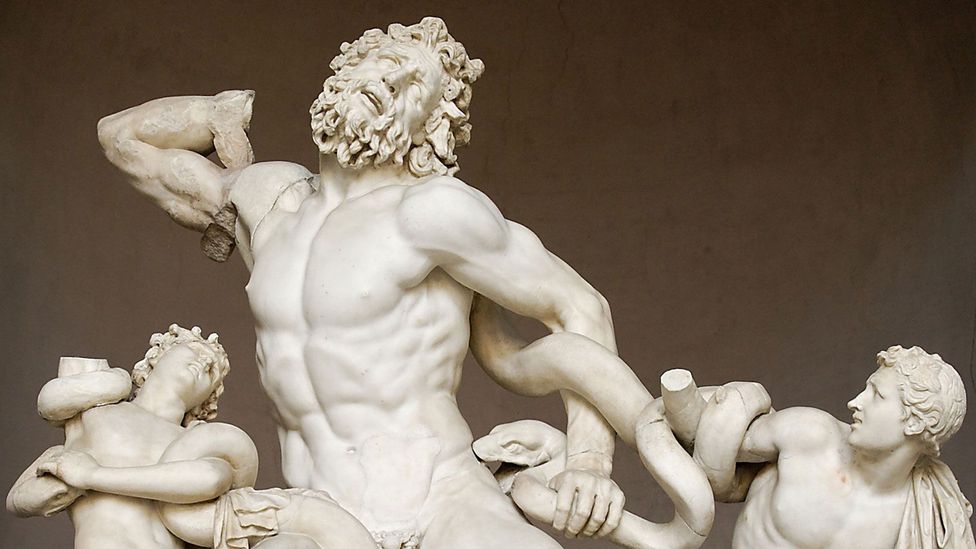
Laocoön and His Sons is an ancient Greek sculpture, dating back to the 2nd century BC. It depicts the story of Laocoön, a priest in Troy who warned his people of a plot by the Greeks to sneak into their city by way of a giant wooden horse. Unfortunately for Laocoön, his warnings were not heeded, and as punishment, he and his two sons were attacked by sea serpents sent from Poseidon.
The sculpture captures the exact moment this event happened; all three figures are frozen in time as they struggle against their captors. Despite its age, it remains incredibly lifelike; one can almost feel the anguish emanating from each figure’s expression. The piece has become an iconic representation of tragedy and suffering throughout history, inspiring countless works of art over centuries past.
The sculpture was discovered in 1506 near Rome’s coast – buried beneath rubble after years of being forgotten. Its discovery caused quite a stir in the artistic world at the time; it was widely considered to be one of the best examples of Greek sculpture ever seen – with many attributing its beauty to sculptor Agesander’s renowned mastery of marble carving techniques. To this day it remains an impressive monument to human suffering and an exquisite representation of classical artistry.
5. Winged Victory at Samothrace
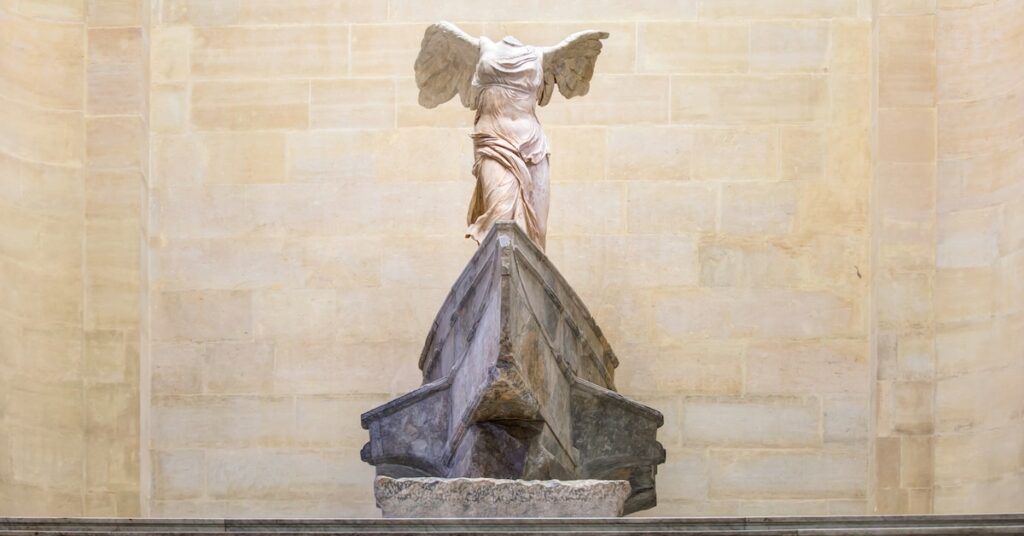
Winged Victory of Samothrace is an iconic marble sculpture from the 2nd century BC. It depicts a figure with outstretched wings and stands at an impressive 8 meters tall. The sculpture is widely considered to be one of the most important pieces of art in existence and has been the subject of many studies and admiration over the centuries.
The statue was discovered in 1863 by French archaeologists on the Greek island of Samothrace, hence its name. Despite its age, it remains incredibly lifelike; each movement and gesture conveys a sense of power and grace that captures the eye immediately. Historians believe it was originally placed atop a ship’s prow as part of a religious procession, although its exact purpose remains unknown.
The statue has served as an inspiration for countless artists throughout history, from 19th-century Romantic painters to modern sculptors such as Anish Kapoor. Its influence can still be seen today in works like Paul Landowski’s Christ the Redeemer statue in Rio de Janeiro – which bears many similarities to Winged Victory’s graceful form.
It is perhaps no surprise then, that this sculpture has come to symbolize freedom and victory for many people around the world – making it one of the most famous sculptures in existence.
6. The Pietà

The Pietà is one of the most famous sculptures in the world, and a masterpiece of Renaissance sculpture created by renowned Italian artist Michelangelo Buonarroti. The sculpture is located in St. Peter’s Basilica, Vatican City, and depicts the Virgin Mary cradling the body of Jesus Christ following his crucifixion.
The Pietà was commissioned by Cardinal Jean de Bilhères in 1498, and it took Michelangelo two years to complete the project. Although he was only 24 years old at the time, Michelangelo had already achieved considerable fame for his other works such as David and The Battle of Cascina.
The Pietà stands out due to its lifelike detail and emotional depth; Michelangelo has masterfully captured both grief and tenderness in his portrayal of Mary holding her son’s body. It is also notable for its size, with Mary herself standing around 6 feet tall – making it much larger than comparable statues from this era.
Today the Pietà continues to be admired by art lovers across the globe, who come to marvel at its beauty and poignancy each year. As an iconic example of Renaissance artistry, it remains an enduring tribute to Michelangelo’s genius and skill as a sculptor.
7. The Discobolus
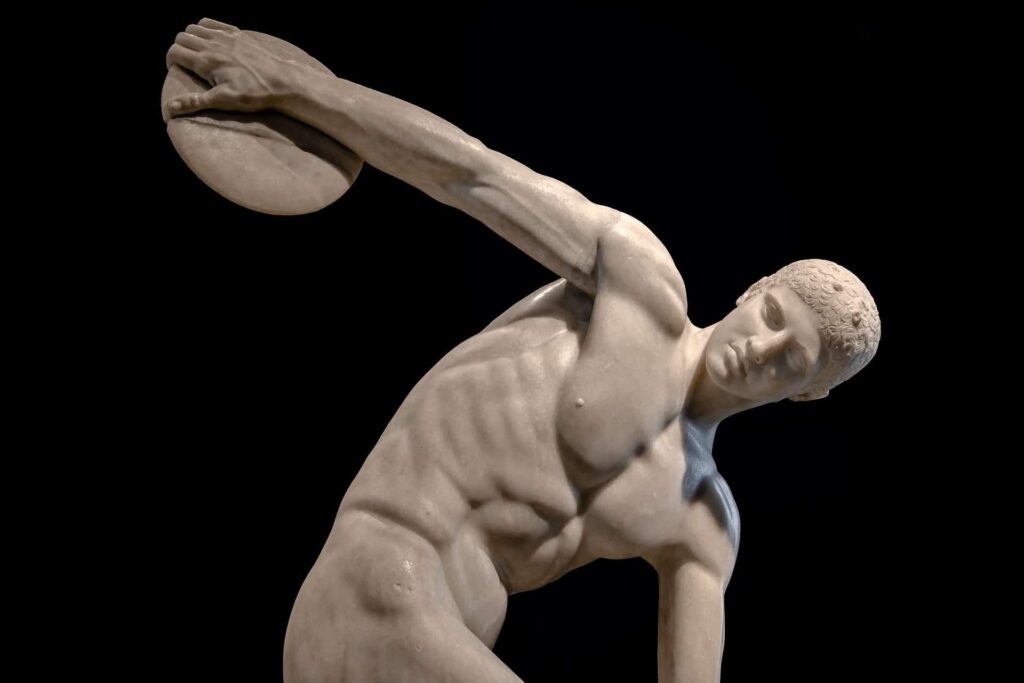
The Discobolus is one of the most famous sculptures in the world, and an iconic symbol of ancient Greek art. It was created by renowned Greek sculptor Myron around 460 BC and is believed to be a representation of the athlete discus thrower known as Discobolus.
The sculpture stands at a height of 1.68 meters and depicts a young man in mid-action as he throws a discus – his muscles tensing and facial expression intense with concentration. The sculpture’s power and grace have made it renowned throughout history; it has been praised both for its beauty and technical skill.
Despite being over two thousand years old, the Discobolus still captivates audiences today. It has been copied many times over since its creation, appearing on coins, pottery, and statues across Europe – including the façade of Buckingham Palace in London.
It remains an enduring testament to Myron’s genius as an artist, inspiring countless generations with its lifelike detail and athletic precision – standing out as one of the most influential sculptures from Ancient Greece.
8. The Great Sphinx of Giza
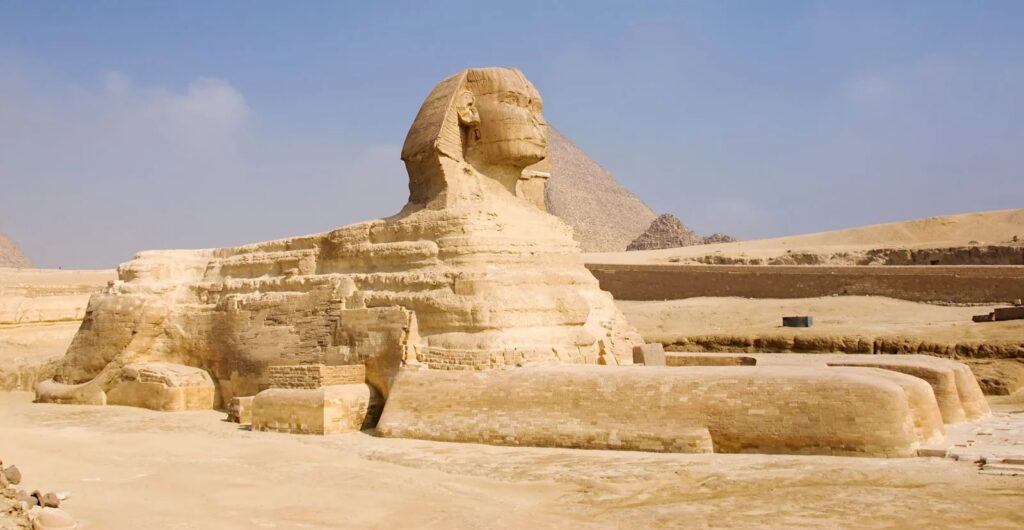
The Great Sphinx of Giza is a massive limestone sculpture that stands guard at the entrance to the Giza Necropolis in Egypt. Carved around 2558–2532 BC during the reign of Pharaoh Khafre, it’s believed to be a representation of him – as well as a representation of the god Horus.
The sphinx measures 73 meters long and 20 meters high, making it one of the largest sculptures in the world. Its giant size is only matched by its impressive detail – from its human head with royal beard and crown to its powerful lion body with muscular legs and claws.
The sphinx has become an iconic symbol of ancient Egyptian culture, appearing in artwork across Europe for centuries. It was also popularized in modern times through films such as Stargate (1994) and The Mummy (1999). Despite being thousands of years old, it remains an awe-inspiring sight today – drawing millions of visitors each year who come to marvel at its majestic beauty.
9. David (Donatello)
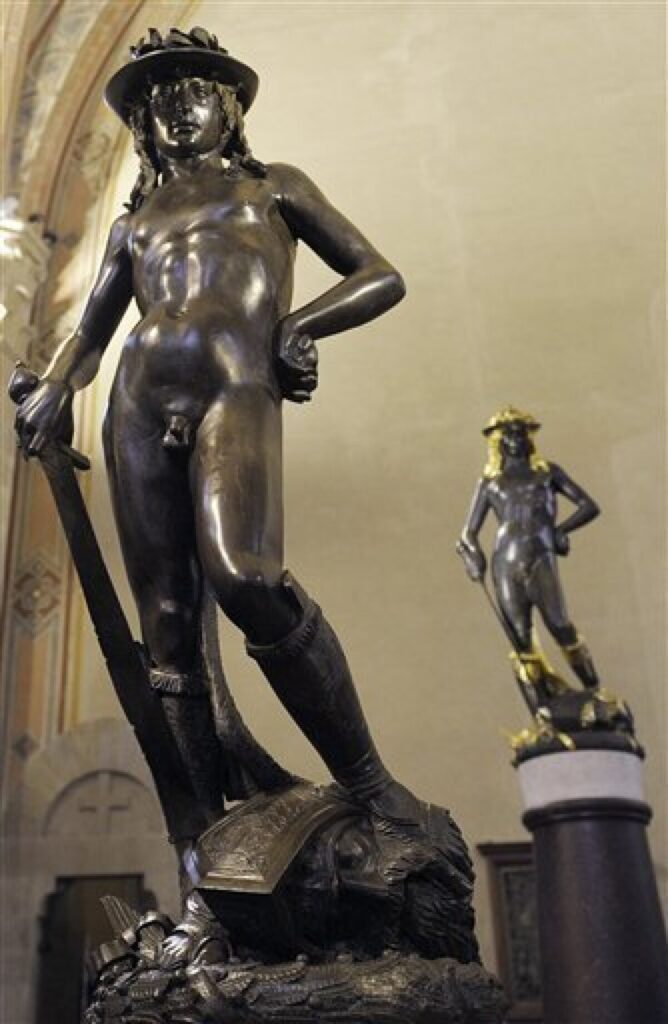
David (Donatello) is one of the most famous sculptures in the world. Created by Italian sculptor Donatello, it stands at 5.17 meters tall and weighs over 6,000 kg. It is located in Florence, Italy, but was originally placed in the courtyard of the Palazzo Vecchio in 1409.
The sculpture captures David as a powerful yet graceful figure prepared to do battle with the giant Goliath. He holds a slingshot in his right hand and a stone ready to be thrown with his left. His gaze is intense and determined, with a look that seems to speak of courage and faith even if faced with overwhelming odds.
Until then, no other artist had captured such an emotion-filled expression on marble before – making this sculpture truly revolutionary for its time. Even today it remains an iconic symbol of Renaissance artistry that continues to capture the imagination of viewers all over the world.
Conclusion
The conclusion of this article brings together the various masterpieces of sculpture discussed throughout its length. From the majestic The Statue of Liberty to the timeless beauty of the Winged Victory of Samothrace, these sculptures have stood the test of time, inspiring generations for centuries. Their ability to captivate viewers with their skill and finesse has made them some of the most iconic sculptures in the world. As we continue to explore new art forms and contexts, these timeless works will remain a source of inspiration for all those who come across them.

